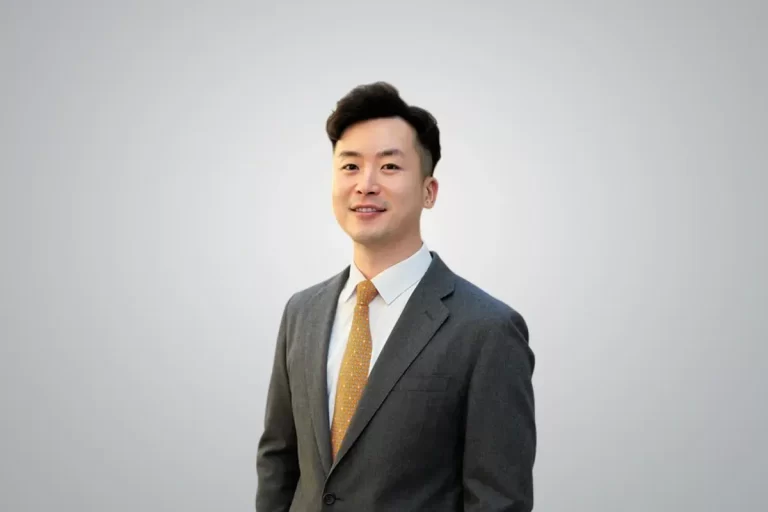


Instilling Belonging As A Shared Responsibility
Director of Public Affairs & Community Relations
NYC Health + Hospitals/Bellevue
Instilling Belonging As A Shared Responsibility
Director of Public Affairs & Community Relations
NYC Health + Hospitals/Bellevue
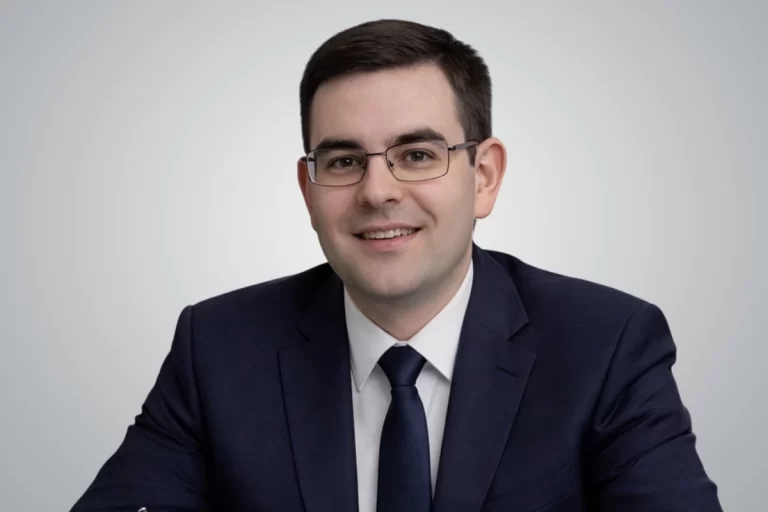
Finding your place in a new country can shape how you see the world, but Shawn Ma turned that experience into a lifelong commitment to helping others find theirs. Arriving in North America as a young Chinese immigrant, he came to understand the importance of being heard, represented, and included. Gradually, that perspective shaped the foundation of his career in public service. His journey began with an internship on Justin Trudeau’s campaign for Prime Minister while studying at the University of Toronto, followed by his first full-time opportunity in New York City government in 2019. He later served in the administrations of Mayor Bill de Blasio, Mayor Eric Adams, and Governor Kathy Hochul, taking on leadership responsibilities in strategic projects, Asian American affairs, and constituency engagement. Today, as the Director of Public Affairs and Community Relations at NYC Health + Hospitals/Bellevue, he brings these experiences to America’s oldest public hospital. Alongside his continued studies at New York University School of Law, he remains focused on a larger purpose, strengthening the connection between institutions and the people they serve.
In this exclusive conversation with TradeFlock, Shawn discusses the experiences that shaped his leadership and why creating opportunities for others is among the most meaningful responsibilities of influence.
I often think about how unlikely this journey would have seemed to my younger self. When I first came to North America, I was learning a new language, adapting to a different culture, and trying to understand where I belonged. A career in government was certainly not something I had imagined.
My first introduction to public service came while studying at the University of Toronto, when I interned on Justin Trudeau’s campaign for Prime Minister. What stayed with me was not the politics, but the realization that even as a young person still finding my direction, I could contribute to something larger than myself.
In 2019, Mayor Bill de Blasio gave me my first full-time opportunity in New York City government. That early trust changed my trajectory and taught me how consequential it can be when someone opens a door for you. I later served in Governor Kathy Hochul’s administration as Director of Asian American Affairs and Senior Director for Constituency Affairs, where I learned to connect communities with decision-makers.
Joining Bellevue gave those experiences a more personal meaning. I now work alongside people whose decisions can mean the difference between life and death. My responsibility is to strengthen the relationships, public trust, and support that help make their work possible. Looking back, my career has been less about moving between positions and more about discovering what service means at every stage.
One of the most challenging responsibilities is deciding how to communicate stories involving human suffering. Public hospitals need visibility, community confidence, and government support to sustain their work. Yet some of the most compelling stories involve people experiencing devastating injuries, psychiatric crises, or profound personal loss.
My approach is to put the patient before the institution, even when that means taking a more restrained communications approach. This does not mean avoiding powerful stories. Bellevue has extraordinary examples of resilience and medical care that deserve to be shared. But they must be told with humanity, accuracy, and respect. When priorities compete, the people we serve must remain the starting point for every decision.
The physicians, nurses and clinical care teams at Bellevue save lives. My responsibility is to help ensure they have the public trust, institutional visibility, and community and government support needed to continue doing so.
That means looking beyond immediate communications outcomes. My work spans strategic communications, media relations, reputation management, and community engagement, but these functions ultimately serve a larger purpose: strengthening Bellevue’s relationship with the city it has served for nearly three centuries.
Effective communication can help patients understand available services, strengthen employee pride, build confidence among government partners, and demonstrate why public healthcare deserves investment. Bellevue serves more than 150,000 patients annually, and its impact reaches far beyond any single neighborhood.
I want every New Yorker to see Bellevue as an institution they would choose, recommend, and trust. Success, for me, means narrowing the gap between the exceptional care the hospital provides and the public’s understanding of that care.
I think one of the greatest mistakes institutions make is assuming that representation automatically creates belonging. Seeing people who share your background in positions of leadership matters, but it does not necessarily mean an institution understands your experiences or responds to your needs.
I saw this while working with Asian American communities across New York. Institutions sometimes approach extraordinarily diverse populations as though they share identical priorities. Yet a recently arrived immigrant, a multigenerational American family, a small-business owner, and an elderly resident with limited English proficiency can have very different concerns.
People should have opportunities to participate in conversations about policy, funding, healthcare access, and decisions that affect their lives. This becomes especially important in public healthcare. Someone who is seriously ill may also be navigating a language barrier, uncertainty about treatment costs, or concerns about immigration status. In that situation, trust can determine whether they seek care at all. Institutions must move beyond acknowledging communities and build relationships that make people feel genuinely included. This is exactly what Bellevue is doing.
One of the most important lessons I carried from government into healthcare is that meaningful progress begins when people with different responsibilities understand one another. At Bellevue, these groups may share the same goal of improving patient care, but they approach it from very different perspectives. Physicians consider clinical needs and patient outcomes, administrators must account for staffing and infrastructure, elected officials weigh public investment, and community advocates want to see improvements translate into better access.
My responsibility is often to connect those perspectives. The modernization of Bellevue’s adult inpatient psychiatric facilities is a good example. In September 2026, Bellevue announced $25.6 million in City Council capital funding to modernize these facilities and create 40 additional beds. While the investment has an important operational purpose, its significance goes much further. Those beds mean more opportunities for people experiencing psychiatric crises to receive appropriate treatment and for families to find the help they need.
I begin by listening to the people closest to the problem, particularly clinicians and operational leaders. Their expertise then needs to be communicated in a way that policymakers, community partners, and the public can understand. Our work in Public Affairs should not begin when a project is ready for a press release. It should help build relationships and understanding throughout the process. The real achievement is when different stakeholders recognize their shared responsibility for the people who depend on the institution.
The principle that has guided me is that public service is a responsibility, not a title. Earlier in my career, I understood service largely through the lens of policy, government programs, and responding to community needs. Bellevue has given that belief a much deeper meaning.
In September 2026, Bellevue shared the story of a New York City sanitation worker who survived devastating injuries after a traumatic accident. His recovery involved extensive surgery, intensive care, and treatment across multiple specialties. What stayed with me was not only the medical expertise involved, but the people behind the experience: a patient fighting to recover, a family facing uncertainty, and healthcare professionals whose commitment extended far beyond a single procedure.
Stories like his explain why public hospitals matter. Bellevue is where New York comes when life takes an unexpected turn. Its nearly three-century history is remarkable, and its legacy is renewed every day through the people who care for patients and the lives changed by that care. I am fortunate to help those stories reach the public and build support for the institution. Ultimately, I measure my career by whether my work makes someone else’s life better.
I would tell them they do not need to feel ready before they begin. When I entered public service, I had no established professional network or clear roadmap. I had curiosity, a willingness to work, and people who believed in me before I fully believed in myself.
Leadership develops long before someone receives a title. It takes shape through everyday decisions: showing up when things become difficult, treating people with respect, keeping your word, and accepting responsibility when something does not go as planned.
I would also encourage young people to stay open to opportunities they may not have anticipated. I never planned to build a career in healthcare, yet Bellevue has become one of the most meaningful chapters of my professional life because it brought together my experiences in government, community engagement, and public service.
Do not become so focused on reaching a particular position that you overlook the meaningful work you can do along the way. And when you eventually find yourself in a position to influence someone else’s journey, remember those who helped you get there. Make sure you create opportunities for others, too.











About Us
TradeFlock USA is a dynamic business platform spotlighting bold ideas, transformative leadership, and market-shaping innovation, equipping decision-makers with sharp perspectives and competitive intelligence to lead, scale, and stay ahead in a results-driven economy.
Trending News
Popular Categories
Information

Contact Us
+1 201 379 2252
+1 347 321 8020
River Point, 17th Floor, 444 W Lake Street, Chicago, IL 60606, USA