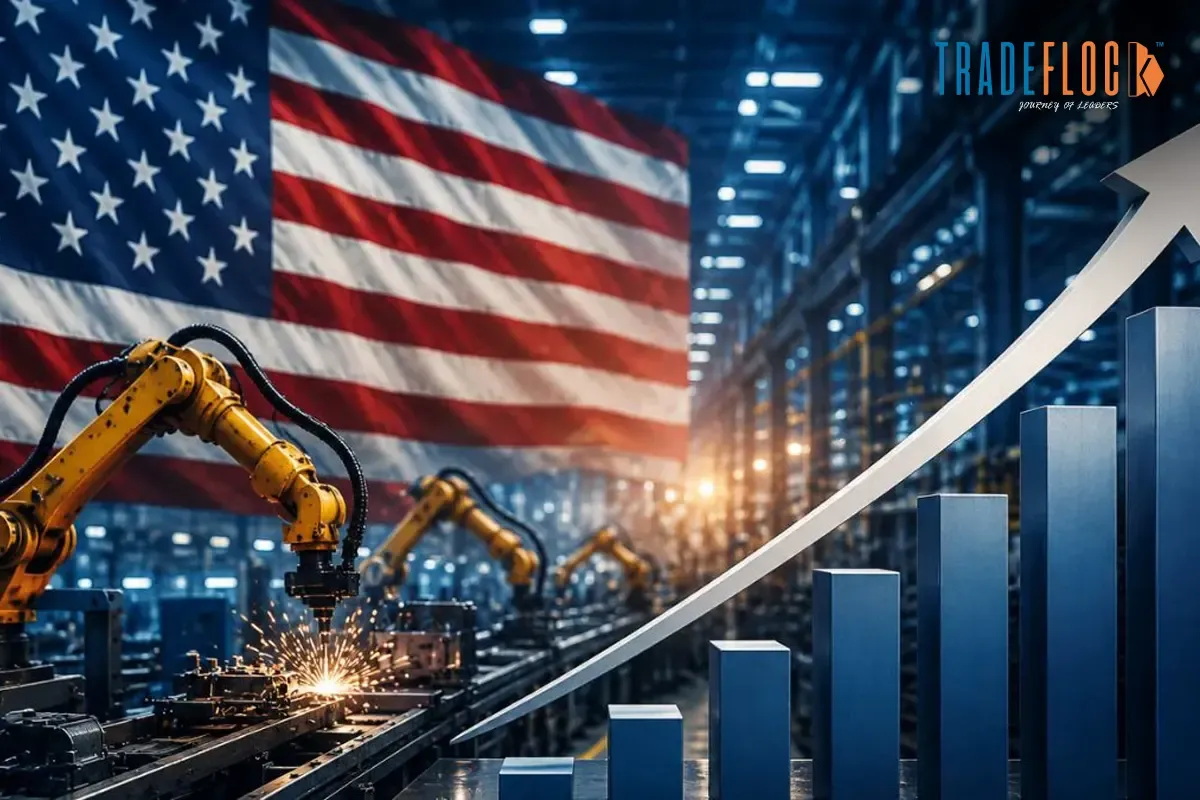
United States manufacturing activity expanded at its fastest pace in four years during May, supported by strong demand, rising new orders, and continued investment in artificial intelligence infrastructure. The latest survey from the Institute of Supply Management indicates that the manufacturing Purchasing Managers Index increased from 52.7 to 54 between April and May, which is above the consensus forecast from economists of a PMI reading of 53. PMI readings above 50 indicate expansion in the manufacturing sector. The May PMI reading represents both the highest index level for manufacturing since the month of May 2022 and the fifth consecutive month of expansion for US manufacturing. The ISM survey also indicated that new orders are up substantially and that backlogs and export demand have also been improving. Economists stated that many companies were purchasing more rapidly than they otherwise would to build inventories due to worries about potential supply shortages and increasing prices.
The increase in consumer consumption of goods has also resulted in an increase in demand for manufactured products due to the desire of companies to expand their operations using advanced technological resources such as data servers, computer chips, and other sophisticated equipment associated with AI technologies. In addition to these factors, companies are experiencing logistical difficulties due to a multitude of geopolitical issues throughout the Middle East, including disruptions to shipping through the Strait of Hormuz amid disputes with Iran, which are increasing costs for transporting energy, aluminum, fertilizer, and other raw materials. Therefore, manufacturing continues to increase production, but there remains a lack of employment available at manufacturing facilities.
Read More: Tesla Retains Graphite Supply Deal With Syrah Resources
Manufacturing companies stated that they were adjusting their labor supply through attrition and selection during recruitment rather than making big hires. The input prices were still high but showed some signs of stabilization when compared to the previous April period. Higher prices of commodities and tight supply were still causing inflationary concerns, raising speculation on whether the Fed may have to keep its interest rates elevated for more time. Analysts stated that some of the manufacturing boost could be due to precautionary inventory building. Still, the recent data indicate the resilience of the U.S. industry amid inflationary risks, geopolitical uncertainties, and supply chain problems.