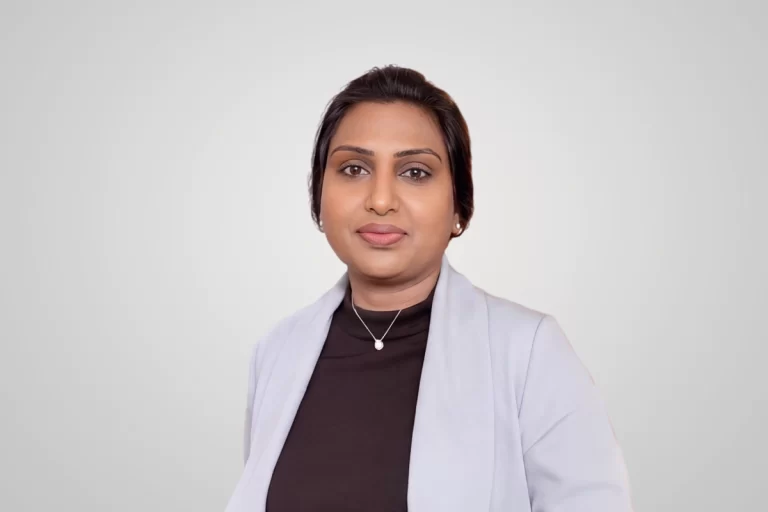
What gap did you see when you first built The Garmon Organization?
I was responding to a gap that rarely appears on a balance sheet, the shortage of institutions willing to think across traditional boundaries. Capital, business operations, public policy, media, and long-term social value are often treated as separate disciplines, yet their connections can reveal opportunities earlier and lead to better decisions. That perspective came from seeing talented people, promising ideas, and undervalued assets overlooked because they did not originate in a major financial or political centre. Rather than viewing independence as a constraint, I saw it as an advantage and wanted to build an organisation that could operate on a national stage. The Garmon Organization initially focused on financial independence and resilience through productive assets and multiple sources of value. As it grew, its investments and operating interests became a laboratory for understanding risk, behaviour, capital allocation, and long-term value creation. Today, I see it as an institution-building platform that turns vision into assets, ideas into influence, and opportunity into lasting value.
What did raising capital teach you about turning an idea into action?
The hardest part was learning that a strong opportunity and a financeable opportunity are not automatically the same thing. I could see how the assets, ideas, and opportunities fit together because I had designed the strategy, while outside capital providers needed evidence, defined terms, risk protections, realistic projections, and a clear path for their money. Repeated outreach and rejection made the process personally demanding, but I gradually learned to treat every response as information rather than a judgment on me. A question could show where my explanation needed work, an objection could expose a risk I had overlooked, while a rejection could clarify which partners were simply not aligned with the strategy. That experience made me more disciplined about structure, liquidity, collateral, cash flow, timing, downside protection, and accountability. It also taught me that not all capital is equally valuable. The right capital and the right partners must support sustainable growth without compromising control or the original vision.
How do you decide what deserves your attention when everything seems important?
I return to one distinction, signal versus noise, because the difference becomes important when everything around you appears urgent. Signal advances an important objective, strengthens credibility, creates a valuable relationship, improves a system, or produces knowledge that changes a decision. Noise can feel attractive because it brings immediate reactions, visibility, or the satisfaction of completing small tasks, even when it creates little durable value. Consequential work is often quieter, involving research, relationship-building, financial analysis, or follow-up whose value becomes visible only after consistency allows it to compound. When priorities compete, I look at the objective, the leverage, the measurable movement, and whether my own judgment is actually required. Technology helps organise information, track commitments, identify patterns, and reduce repetitive work, but its purpose is to protect attention for strategy and judgment. Focus becomes meaningful when attention is directed toward work that actually moves the organisation forward.
What changed your understanding of influence as your career evolved?
Technology gave me an early framework for understanding complex systems, tracing problems to their source, and examining the decisions and assumptions shaping outcomes. That perspective eventually raised a larger question for me because a well-designed tool can improve a process, but laws, institutions, capital, and public attitudes determine whether innovation can reach people or create lasting change. Building The Garmon Organization brought those questions into practice, while public communication and advocacy showed me another important distinction. Visibility and influence are not the same thing. That became especially clear while developing my federal tax reform framework, where I wanted to build a serious alternative supported by revenue, behavioural, and implementation modelling rather than simply repeating familiar arguments. Presenting the work in Washington and engaging with congressional offices then showed me that access is only the beginning. Leadership is tested by what you contribute once you are in the room.
What principle guides you when uncertainty makes a decision difficult?
Independent judgment must be paired with personal responsibility. Conventional wisdom can provide context, but it should never replace analysis, which is why uncertainty sends me back to what is known, what is assumed, what could shift, and what evidence would change the decision. I also consider second-order consequences and how reversible the choice is, because decisions involving capital, credibility, relationships, or years of effort deserve greater preparation. Independent judgment does not mean making decisions in isolation. I seek informed perspectives because they help me test assumptions and identify blind spots, while the responsibility for the final decision remains mine. Pressure makes that discipline even more important because urgency and public expectations can make an option appear more compelling than it really is. Ultimately, I try to think independently, act deliberately, and own the result. The freedom to make unconventional decisions carries an equal responsibility to acknowledge mistakes, correct them, and carry the learning forward.