
Pairs AI With Accountability Over Hype
Director – Technical Success Management
Snyk

Pairs AI With Accountability Over Hype
Director – Technical Success Management
Snyk
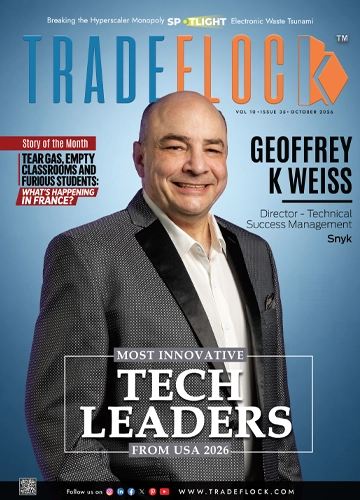
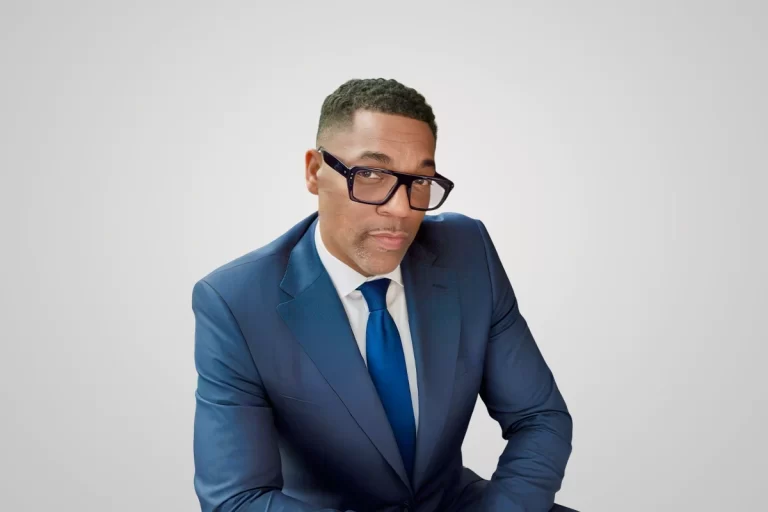
Some of the most consequential work in technology begins after the demonstration: when an organization must decide how to integrate a new capability, earn its users’ trust, and prove that the investment is worthwhile. Geoffrey K. Weiss has spent much of his career tackling this challenge, bringing together technical understanding, commercial strategy, and a practical approach to innovation. At Avetta, he developed an AI-enabled value realization system that connected safety, ESG, and supply-chain risk data with financial outcomes, reducing business-case development time by 70%. Earlier, at BMC Software, he helped transform global customer success operations, linking adoption with measurable business growth. Now, as Director of Technical Success Management at Snyk, he brings this experience to software security, where the challenge extends beyond identifying vulnerabilities to helping organizations improve security practices across development workflows. In an exclusive conversation with TradeFlock Magazine, he talks about how he defines technical success, why regular usage does not prove business value, how he aligns Sales, Product, Services, and Customer Success when priorities collide, and where he sees technology’s untapped potential.
A leader’s responsibility extends beyond the decisions they make. People entrust you with part of their careers, while customers put their own credibility behind the promises you make. I have always felt both deserve my full commitment. My background in finance and analytics taught me to connect decisions with business consequences, and my time in value engineering at SAP sharpened my understanding of what customers needed to accomplish to realize results.
At BMC, integrating two customer success organizations into one global operating model reinforced how important consistency is. Shared learning, clear expectations, and recognition became essential to helping people succeed. Avetta taught me to make value relevant to different stakeholders, while Snyk brought that thinking into technical success. My expectations remained high, but I see it as my responsibility to give people the clarity, support, and opportunities they need to meet them.
As customer needs grow more complex, technical success cannot depend solely on reacting to issues as they arise. At Snyk, I focused on making the function more proactive and scalable without losing sight of the value each customer expected.
We needed a shared understanding of the customer’s objectives, who was responsible for each part of the work, and what evidence would demonstrate progress. Those commitments had to carry through implementation, adoption, and executive reviews. I worked to bring customer objectives and technical insights together so teams could prioritize effectively. Standardization and thoughtful automation helped free up more time for customer conversations and problem-solving.
There is also a personal dimension to this responsibility. Someone within the customer’s organization advocated for the investment. I want that person to be able to explain what changed, why it mattered, and why placing their confidence in us was the right decision. This is where value realization and financial impact happen. It is important to quantify and ensure your customers agree and recognize it. Seeds for cross-sell/upsell are planted here.
Remaining effective as a leader means being willing to revisit what you know. I keep learning by building, listening, and inviting others to challenge my thinking. At Avetta, reusable value frameworks and AI-enabled work reduced business-case development time by 70%. The experience strengthened my interest in turning new capabilities into practical improvements rather than pursuing technology for its own sake.
Over the next six months, I am rebuilding and deepening my Python and AI-assisted development skills, including vibe coding, so I can fully use the workflow and agentic capabilities of the latest AI models. Within three years, I expect leading customer success organizations to become predominantly AI-operated and human-governed, delivering personalized guidance, video, next-best actions, and proactive intervention at a one-to-one level. Within five years, Customer Success will be less a standalone department and more an intelligent operating layer across the enterprise. AI will perform much of the execution, while people remain accountable for governance, judgment, trust, strategic relationships, and measurable customer outcomes.
Developing people is just as important to me. A colleague who reported to me at National City and Nationwide recognized my commitment to supporting people throughout their careers, including when their next opportunity takes them beyond my team. I consider that part of my responsibility as a leader. Organizations grow stronger when people are given the confidence and capability to lead in their own right.
One of technology’s most promising possibilities is making the right expertise available at the moment someone needs it. I am exploring personalized video guidance that responds to a customer’s product, specific issue, and troubleshooting steps already attempted. The customer could ask follow-up questions, with a human specialist stepping in when necessary and receiving the context of the interaction. This could reduce frustration and make support much more useful and more personalized.
The same principle could help organizations share experienced employees’ knowledge with more colleagues and give smaller businesses access to capabilities they may struggle to afford. Realizing this potential depends on trusted information and clear accountability, not simply automation. It also matters what we do with the capacity recovered. I want organizations to reinvest that time and effort in their people and customers, so both become more capable.
Regular product usage can look encouraging, but it does not necessarily mean the customer’s business has improved. Lasting value begins when customers understand the change they need, take ownership of it, and connect technology to better ways of working, stronger decisions, and measurable results.
This work starts during discovery. We agree on the problem, establish a baseline and target, and identify who is accountable for the outcome. Those commitments must carry through the customer lifecycle while adapting to changing priorities. My value engineering work at SAP and BMC, alongside the frameworks I developed at Avetta, reinforced the importance of keeping the business case useful after purchase.
Technical success teams must connect implementation and adoption milestones to operational improvements and validate the impact with the customer. More security scans mean little if priority vulnerabilities remain unresolved. Time saved matters when people use it productively, while recovered capacity should not be confused with cash savings unless spending actually falls. The essential questions are what changed, who benefited, and whether the evidence supports the claim. Customers should be able to defend and sustain the results they achieve.
A technology investment should continue to prove its worth long after implementation. Customers invest because they want a business outcome, and technical success means helping them achieve it and sustain it as their needs evolve.
I look at time to first meaningful value, adoption of relevant workflows, and coverage across the applications or repositories in scope. In application security, remediation time and the age of unresolved priority issues are equally important. Averages can hide the very problems that need attention. Metrics must connect to outcomes customers recognize, including reduced exposure, less rework, and improved productivity. Retention offers another view of the relationship over time, but numbers need interpretation. I expect teams to question what the evidence is telling them. A dashboard is useful when it helps us decide what to do better for the customer.
Introducing a new tool is only part of innovation. The harder question is whether people can use it effectively and whether it improves the way they work. At Snyk, I led the selection and implementation work for Planhat and as an Admin, I personally built and configured AI capabilities and workflows. The aim was to connect customer information with clear objectives, mutual success plans, and practical actions.
An important consideration was deciding what should be standardized on a shared platform and where custom AI workflows could add value. I also considered ongoing ownership, support requirements, and the team’s maturity to use what we built. The work produced configured capabilities, defined workflows, and rollout plans. Since implementation was still underway, adoption, customer outcomes, and capacity returned to the team were the measures needed to assess success. Innovation should help people understand customers better, exercise sound judgment, and follow through consistently. AI now allows us to meet customers at scale on a one-to-one customized interaction model.
A customer’s experience is shaped by every team they encounter, not just the department formally responsible for customer success. I think of the customer lifecycle as a show with connected acts. Sales establishes expectations, Services turns commitments into a working solution, Product shapes the experience, and Customer Success helps sustain adoption and value. Each stage influences the trust carried into the next.
My experience has shown that cross-functional alignment works best when teams share accountability for the customer’s overall success rather than focus only on their individual responsibilities. Clear communication, consistent expectations, and recognition of collaborative contributions help maintain continuity across the customer lifecycle.
When priorities conflict, I bring the discussion back to customer commitments, business impact, delivery capacity, and the consequences of each choice. We then agree on the action, the accountable owner, and how progress will be measured. If an executive decision is needed, I take responsibility for making it and explaining why. Culture is built through what leaders recognize, measure, and address every day.
When a customer stops adopting a product, it is tempting to focus on usage figures alone. I prefer to understand what is getting in the way of the work people need to do. Unclear expectations, incomplete integrations, abandoned workflows, repeated support issues, or usage concentrated among a small group can reveal where the journey is breaking down. Even a quiet support queue may indicate that people have stopped trying.
At BMC, I introduced Adoption Plans alongside Value Reviews to connect product usage with customer objectives and identify additional use cases. We also built a Community of Practice where teams could share lessons and improve how they supported customers.
The right response depends on the cause. It may involve fixing an integration, coaching a team, clarifying an executive priority, or acknowledging a product limitation. I want every response to have a named owner, a next milestone, and evidence of progress. Ultimately, adoption means helping people do meaningful work more effectively.





About Us
TradeFlock USA is a dynamic business platform spotlighting bold ideas, transformative leadership, and market-shaping innovation, equipping decision-makers with sharp perspectives and competitive intelligence to lead, scale, and stay ahead in a results-driven economy.
Trending News
Popular Categories
Information

Contact Us
+1 201 379 2252
+1 347 321 8020
River Point, 17th Floor, 444 W Lake Street, Chicago, IL 60606, USA